Building Operational Discipline into the Network
Reliable performance depends on consistent execution. How clear standards, accountability, and simple controls improve throughput, quality, and predictability across the network.
Discipline drives reliability
In a distributed network, small inconsistencies compound. Irregular intake, informal grading, and incomplete records create variability that slows aggregation and weakens buyer confidence. Operational discipline aligns daily activity to consistent outcomes.
Where discipline breaks down
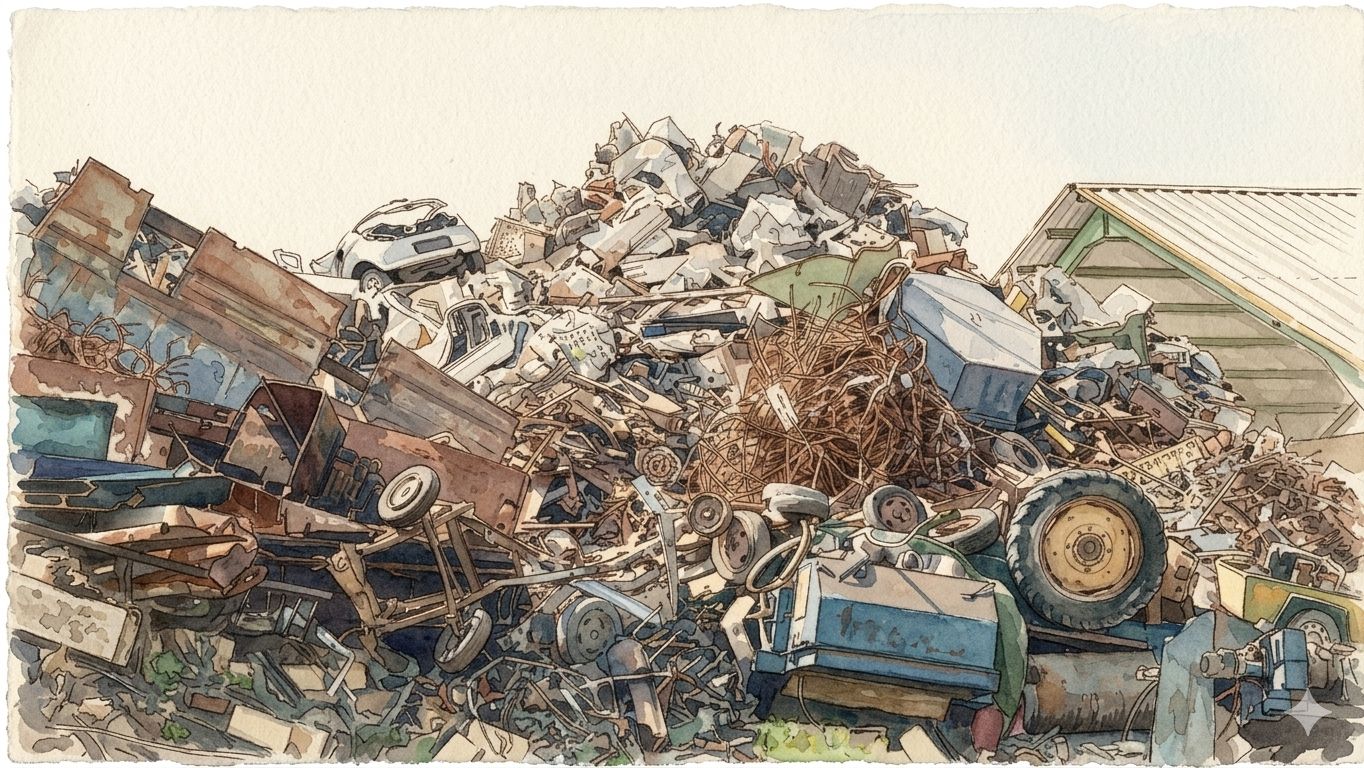
Gaps appear in routine tasks: missed weighbridge entries, mixed grades at intake, undocumented movements, and unsupervised loading. These issues lead to rework, disputes, and delays at export.
Embedding control points
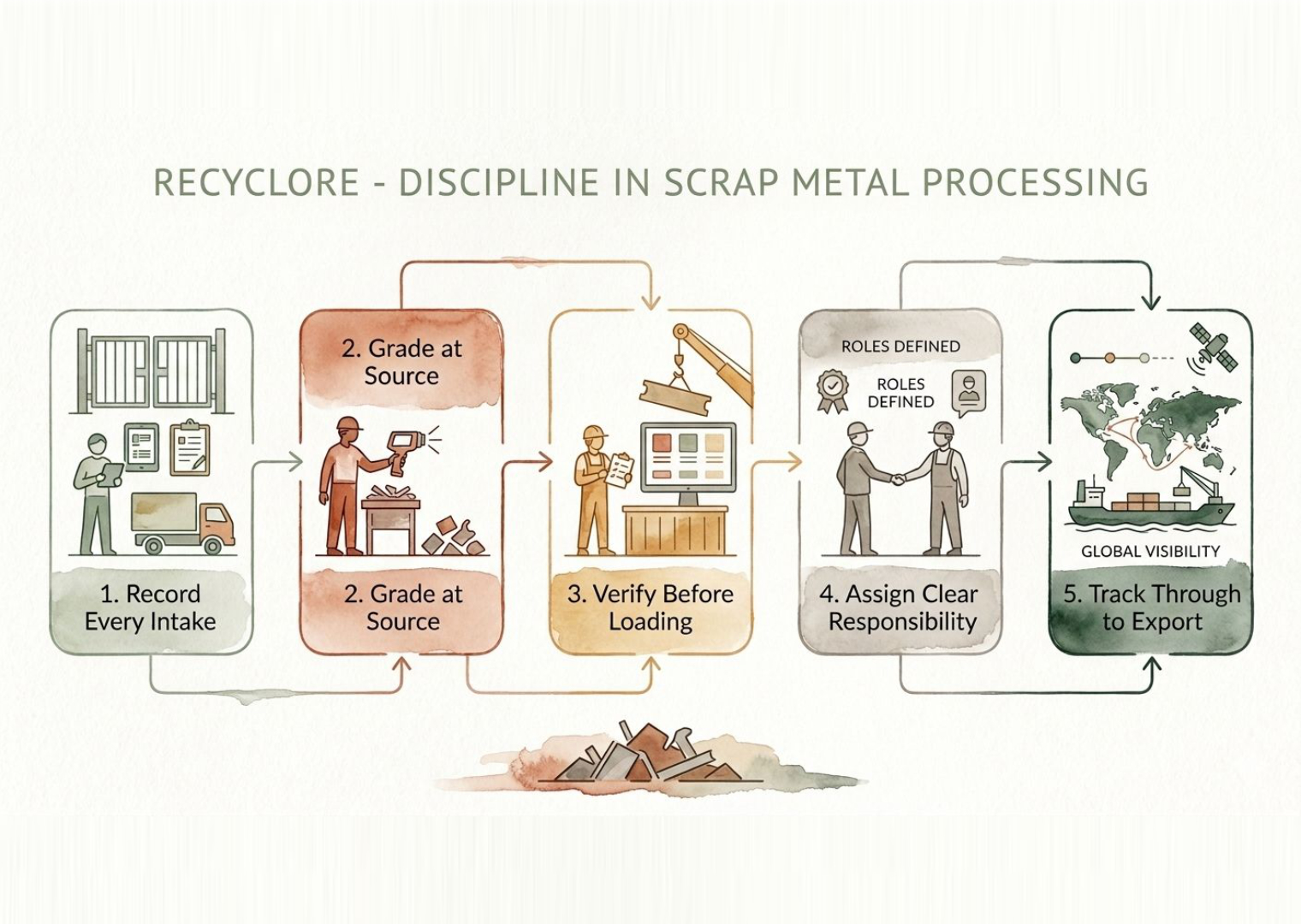
Establish simple, repeatable controls: intake tickets for every load, standard grading at receipt, and a second verification before container sealing. Define yard zones (intake, sorting, staging) and assign responsibility at each step.
Use checklists and brief daily huddles to align teams on targets, safety, and shipment schedules. Record key actions to create traceability from intake to export.
Accountability across the flow
Clear ownership reduces errors. Assign named responsibility for intake, grading, staging, and loading. Link records to each stage so variances can be identified and corrected quickly.
From activity to standard
Discipline turns routine actions into reliable output. Consistent execution reduces friction, improves quality, and supports predictable export cycles.
Operator Rule
Do the basics every time: record, grade, verify, and load to plan. Consistency is the system.

Subscribe to the Recyclore Brief
Stay informed on material flows, market signals, and platform activity—delivered with clarity, discipline, and a focus on how the ecosystem is evolving in real terms.